Is Your Electrical System Ready for Summer AC Use?
June 30, 2026
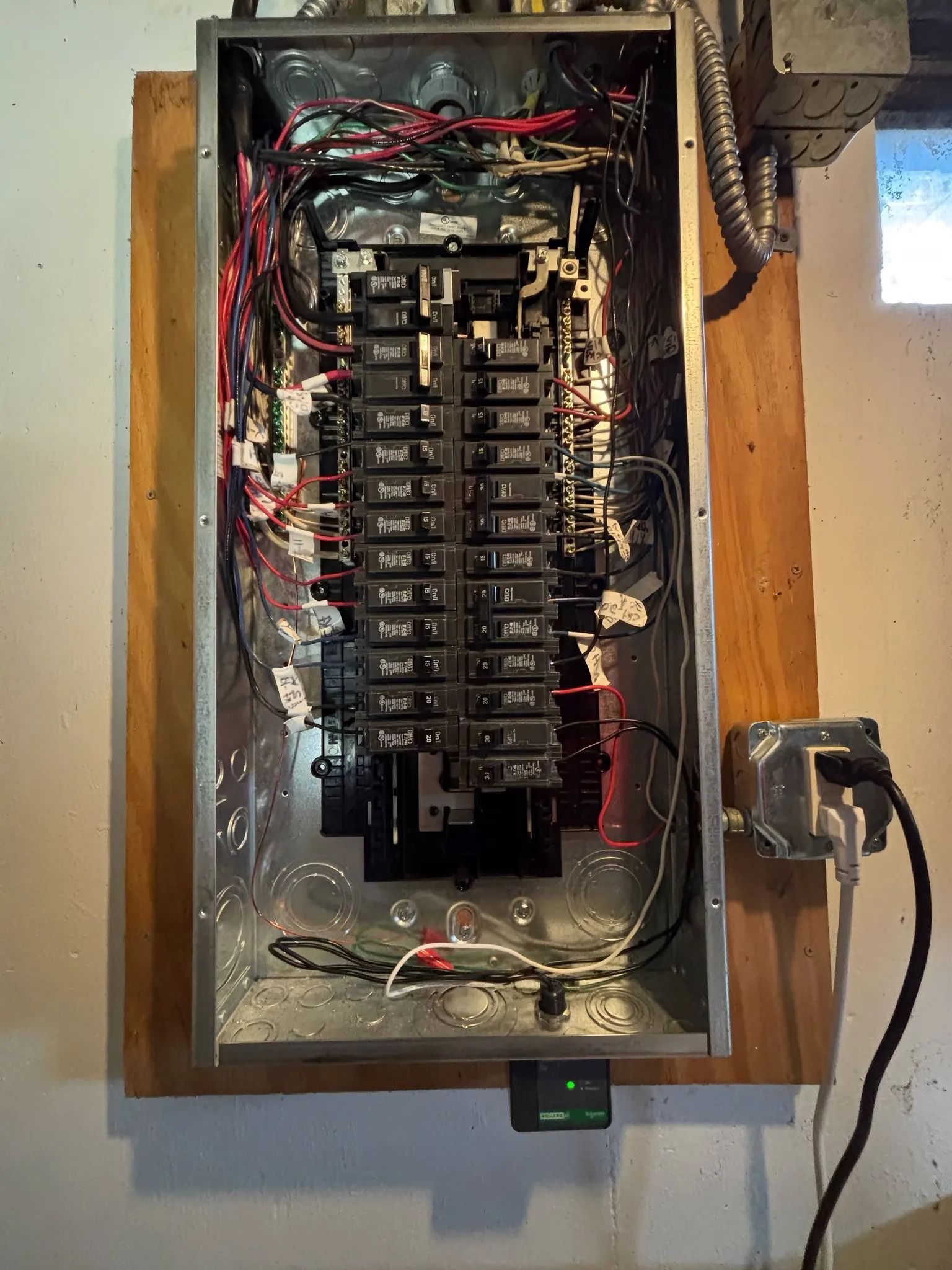
The first real scorcher of the year hits, you crank the thermostat down, and twenty minutes later the house goes quiet. The air handler stops, the lights in the kitchen are still on, and you are standing at the panel flipping a breaker back that refuses to stay. By the third reset you start wondering if the air conditioner is dying. Most of the time it is not. The unit is fine. What you are watching is your electrical system telling you it cannot carry the load your cooling system is now demanding of it.
We have stood in front of a lot of warm panels in July, and the pattern almost never changes. A central air system pulls a heavy surge of power the instant the compressor starts, and on the hottest afternoons it runs nearly nonstop. If a breaker is weak, a circuit is shared, or a connection has loosened over the years, that summer demand is what finally exposes it. The good news is that this is predictable, testable, and fixable before the heat arrives.
What to Do the Moment a Breaker Trips
Start simple and move in order so you do not chase the wrong thing.
- Turn the thermostat off and let the system sit for at least five minutes before resetting anything. This lets the compressor settle and prevents a hot restart.
- Reset the breaker once by pushing it fully off, then firmly back on. A breaker that only partially resets keeps tripping.
- Watch what happens when the AC starts again. If it trips at the exact moment the compressor kicks on, the problem is almost always electrical, not the thermostat or the air handler.
- Touch the breaker and the panel cover with the back of your hand. Warmth that you can clearly feel is a red flag.
WARNING:
Never replace a breaker with a larger one to stop the tripping. A breaker is sized to protect the wire behind it. Putting a 20 amp breaker on wire rated for 15 amps removes that protection and lets the conductor overheat inside the wall, which is how electrical fires start. If a breaker keeps tripping, the wire is asking for help, not a bigger breaker.
TIP: Before you call anyone, run the AC while nothing else heavy is on, then run it again with the microwave or a hair dryer going. If it only trips during that second test, your air conditioner is sharing a circuit it should not be, and that narrows the fix considerably.
Why Summer Load Pushes Your Panel to Its Limit
A central air compressor draws roughly three to seven times its normal running current at the instant it starts. That surge lasts only a fraction of a second, but it is brutal on anything weak in the path. A breaker that has tripped a few hundred times over the years loses sensitivity and starts nipping out under loads it once handled. Once the compressor is running, it settles into a steady draw that, on a 95 degree day, can sit close to the breaker rating for hours at a stretch. Heat de rates breakers too, so a hot panel in a hot utility room trips at a lower point than the same breaker would in winter.
Older homes feel this first. A lot of the housing stock around here was built during the post war boom with 60 to 100 amp service that was never designed to run central cooling alongside a modern kitchen, a dryer, and everything else plugged in today. When that aging service meets the long humid stretches near Lake Erie, where the system runs far more hours than the national average, the math simply runs out of room.
What Is Actually Causing It
The single most common cause we find is a weak or undersized breaker on the air conditioner circuit, or an AC unit sharing a circuit it should have to itself. The warning sign is a trip that lands right at startup.
Loose connections are the quiet second cause. A lug at the breaker or a wire nut in a junction box backs off slightly over years of heating and cooling, and that loose point creates resistance. Resistance creates heat, voltage drops, and nuisance trips that come and go for no obvious reason. These are the ones homeowners misread as a failing AC.
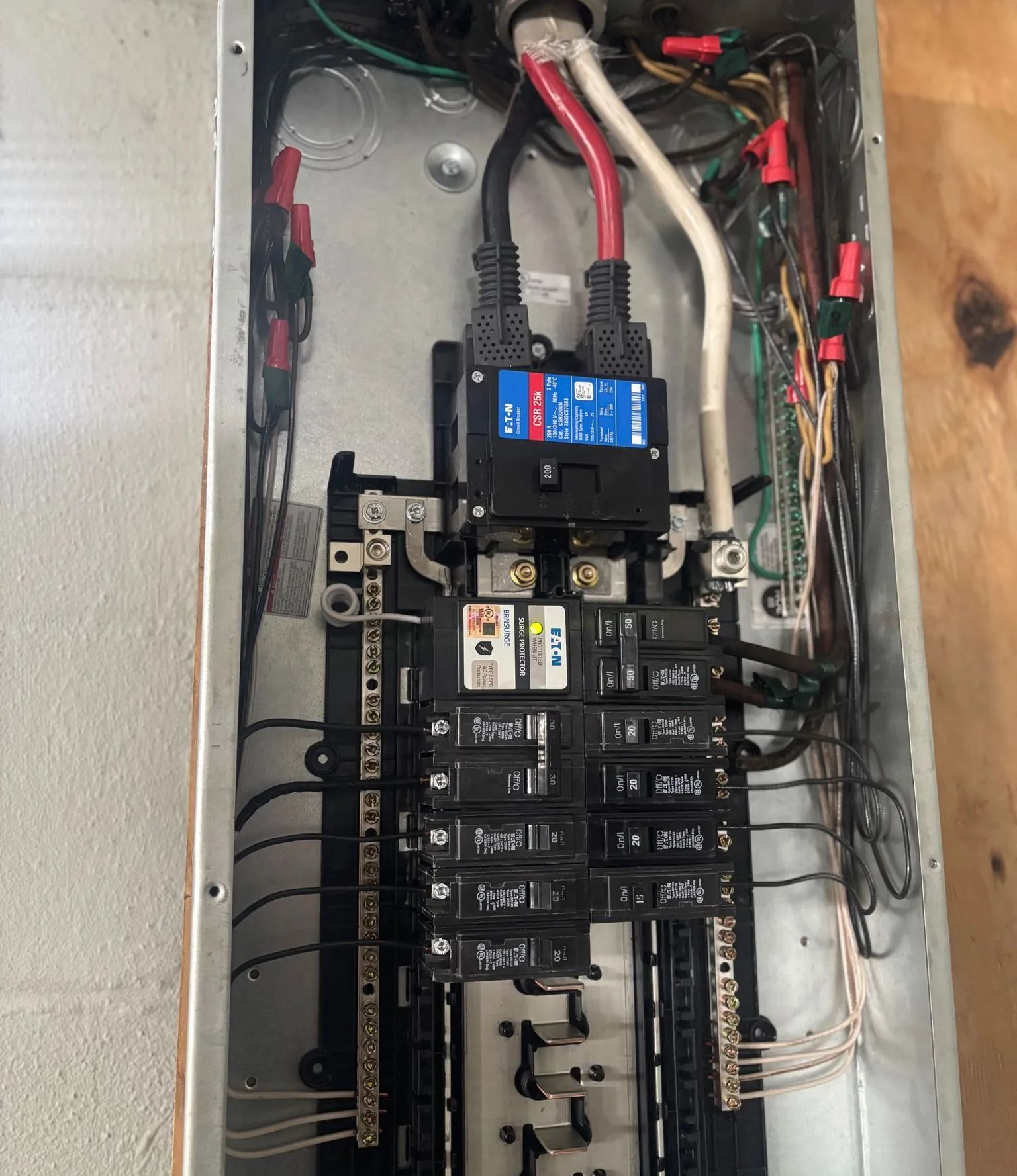
Aging panels are the third. Some older panels in this area have known reliability problems and breakers that no longer trip cleanly or, worse, fail to trip at all. A panel that feels warm, hums, or shows any scorching has moved past nuisance and into a real hazard.
Finally there is the load math itself. Adding a new high demand cooling system to a panel that is already full is the installation related cause we see most. The wiring was fine for the old load. It was simply never sized for the new one.
How We Diagnose It
On service calls we start at the panel and work outward. First we read the nameplate on the AC unit to confirm its minimum circuit ampacity and compare that to the breaker and wire actually feeding it. A surprising number of trips trace back to a unit installed on a circuit one size too small. Second we put a clamp meter on the conductor and watch the real draw at startup and under sustained running load, which tells us whether the breaker is doing its job or simply worn out. Third we check every termination in the panel with a thermal read and a torque check, because a loose neutral or a warm lug shows up there before it shows up anywhere else. We also look for two wires crammed under a single breaker, which overloads that breaker by design. Per standard practice, a central cooling system belongs on its own dedicated circuit, and most summer trips we solve come back to that one principle being broken somewhere upstream.
Your Realistic Repair Options
A few of these you can handle, and a few you should not.
Rebalancing the load
If your AC is sharing a circuit with outlets or appliances, moving those other loads to a different circuit often stops the trips on its own. This is a panel job and belongs to us, but it is the least invasive fix and frequently the right one.
Tightening and servicing connections
Loose terminations get torqued to spec and corroded points get cleaned or replaced. This restores the circuit without major work and usually buys many more years of service. This is professional work, since it means opening a live panel.
Adding a dedicated circuit
When the AC has never had its own line, we run a properly sized dedicated circuit and breaker for it. This is the cleanest long term fix for a unit that trips at startup.
Upgrading the service or panel
When the whole panel is undersized, full, or aging, no single circuit fix will hold. Replacing it gives every summer load the headroom it needs and resolves the trips at the source.
The one thing you can safely do yourself is keep the area around the outdoor condenser clear and the indoor filter clean, which lowers the load the system has to pull in the first place.
Getting Ready Before the Heat
The smartest move is to check the system in spring, before the first heat wave. Monthly, replace or clean your air filter so the unit is not straining against restricted airflow. Each quarter, look and listen at the panel for warmth, buzzing, or a faint burning smell. Once a year, have the breaker strength, terminations, and total load tested while the weather is still mild and we are not racing the heat. Because the cooling season here runs long and humid, that yearly check is what keeps a small worn connection from becoming a July emergency.
Frequently Asked Questions
Why does my AC trip the breaker on hot days?
Your air conditioner compressor draws several times its normal current the moment it starts. On the hottest days it runs longer and harder, so a weak breaker, a shared circuit, or a loose connection finally gives out under that repeated summer load and shuts off.
Can my electrical panel handle a new central air system?
It depends on your service size and how full the panel already is. We measure your real load before adding anything, because forcing a large summer draw onto a crowded panel often creates the very breaker trips you were hoping to prevent this whole season.
Is it safe to keep resetting a breaker that trips?
No. A breaker that trips is protecting your wiring from heat, and resetting it again and again pushes current through conductors that may already be warm. If it trips twice, leave it off and have us inspect the circuit before something overheats inside that wall.
Why do older homes here have more trouble with summer AC?
Many homes here were built during the post war boom with smaller panels never meant for central cooling. Add the humid summers near Lake Erie that keep your system running for hours, and that older wiring reaches its limit far sooner than newer construction does.
When should I have my system checked before summer?
Spring is the right window. Booking an inspection before the first heat wave gives us time to test breaker strength, tighten connections, and confirm your panel can carry the load. Waiting until the system already trips usually means a service call during the hottest stretch.
Reliable Electrical Service Built For Long Humid Summers
If your breaker trips the moment the compressor starts, the problem lives in the circuit far more often than in the air conditioner. That distinction is harder to spot in this area, where post war wiring meets long, humid summers that run cooling systems for hours on end. With 10 years of experience, XH Electric, LLC tests, rebalances, and upgrades summer ready electrical systems for homeowners across Parma, Ohio. Schedule a spring panel check with our licensed and insured electricians before the next heat wave finds the weak point for you.